
10 Hours, 22 Million Impressions: Building Pre‑Release Buzz for Ten Hours
How a focused Meta and YouTube push turned trailer drops into millions of views and got a Tamil theatrical release talked about before it ever hit screens.
A thriller with a ticking clock needed a marketing plan with the same urgency
Ten Hours, produced by Duvin Studios and led by actor Sibiraj, is a Tamil crime thriller built around a bus, a bomb threat, and a race against time. The story's tension gave us the brief itself: build the same sense of urgency in the audience before the film reached theatres.
JNC Verse was brought in to run the pre‑release digital push — turning a poster reveal and a trailer drop into sustained conversation across Meta and YouTube, targeted squarely at the Tamil‑speaking audience most likely to book a ticket on day one.
Build the film's presence
Introduce Ten Hours to a wide Tamil audience ahead of its theatrical release.
Drive trailer views
Push the official trailer and teaser content to maximise watch time and shares.
Generate release buzz
Keep interest climbing right up to the April 18 release date.
Two platforms, one Tamil‑first audience
Rather than spreading spend thin, we concentrated on the two platforms where a mobile‑first, entertainment‑seeking Tamil audience actually spends time — and let each platform do the job it's best at.
Facebook & Instagram
Community reach and shareable creative — poster launches, testimonial‑style videos, and native feed content.
- Reels-led creative for mobile‑first viewers
- Community engagement — likes, comments, shares
- Broad reach with a Tamil‑audience layer
In‑stream trailer pushes
Skippable in‑stream ads in front of relevant content to put the trailer directly in front of intent‑rich viewers.
- Trailer, promo, and sneak‑peek cuts tested separately
- In‑feed, Shorts, and skippable in‑stream placements
- Optimised toward view rate, not just delivery
Targeting stayed consistent across both platforms: viewers aged 20–55, male and female, on mobile devices, across metro cities and Tier 2–3 towns — the footprint of a genuine theatrical audience rather than a purely urban one.
What the countdown added up to
Across Meta and YouTube combined, the campaign put Ten Hours in front of millions of Tamil viewers in the run‑up to release — and did it with creative that people actively chose to watch, not skip.
Meta — Facebook & Instagram
YouTube — Trailer & Promo Push
Where the audience actually showed up
The headline numbers hide the more useful story: exactly which segment, platform, and format did the heavy lifting — which is what shaped every optimisation call we made mid‑flight.
Meta — Audience Split
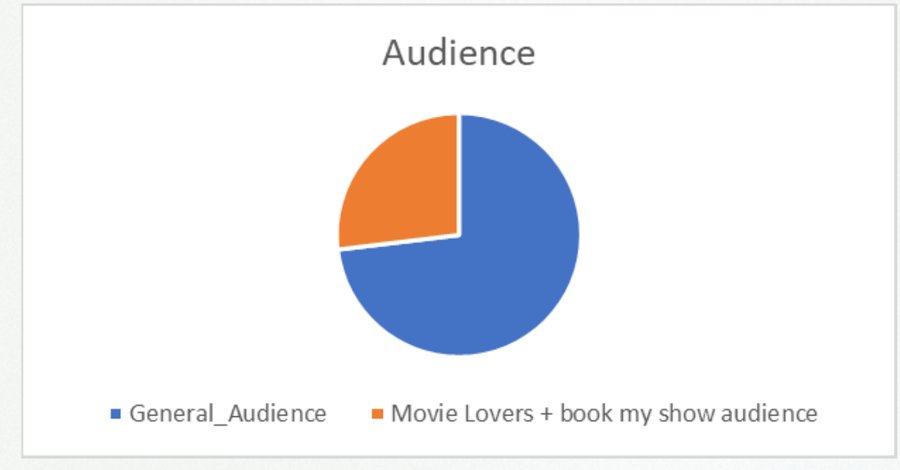
The broad Tamil audience drove reach; the intent‑rich Movie Lovers + BookMyShow segment converted attention into genuine engagement — nearly 3M of reach from a much smaller pool.
Meta — Placement Breakdown
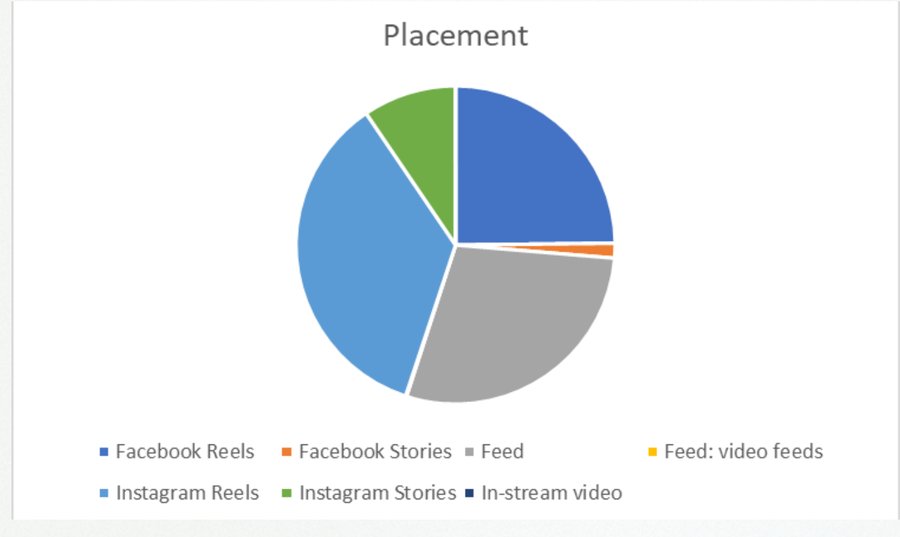
Reels — on both Instagram and Facebook — outperformed every static or standard placement, confirming that short‑form vertical video was the format this audience actually stopped for.
Meta — Platform Split
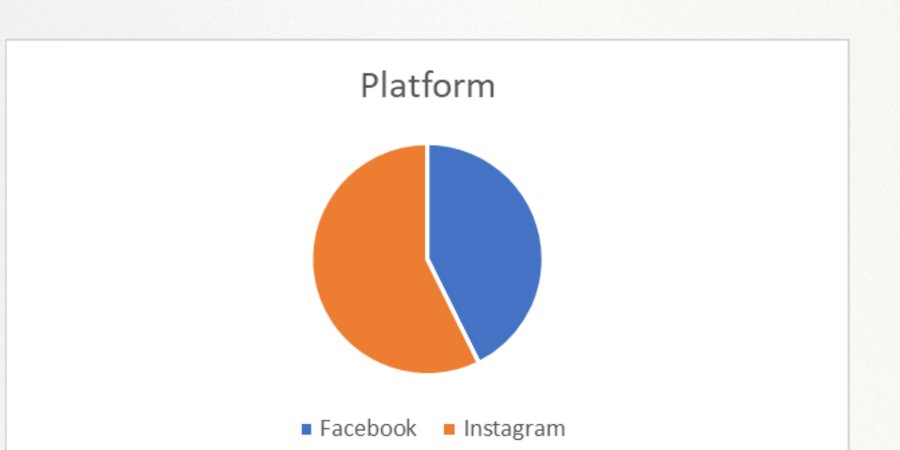
Instagram edged out Facebook — 12.7M vs 9.5M impressions — reinforcing that this audience's attention lived in Reels and Stories more than the traditional feed.
Meta — Impressions & Reach
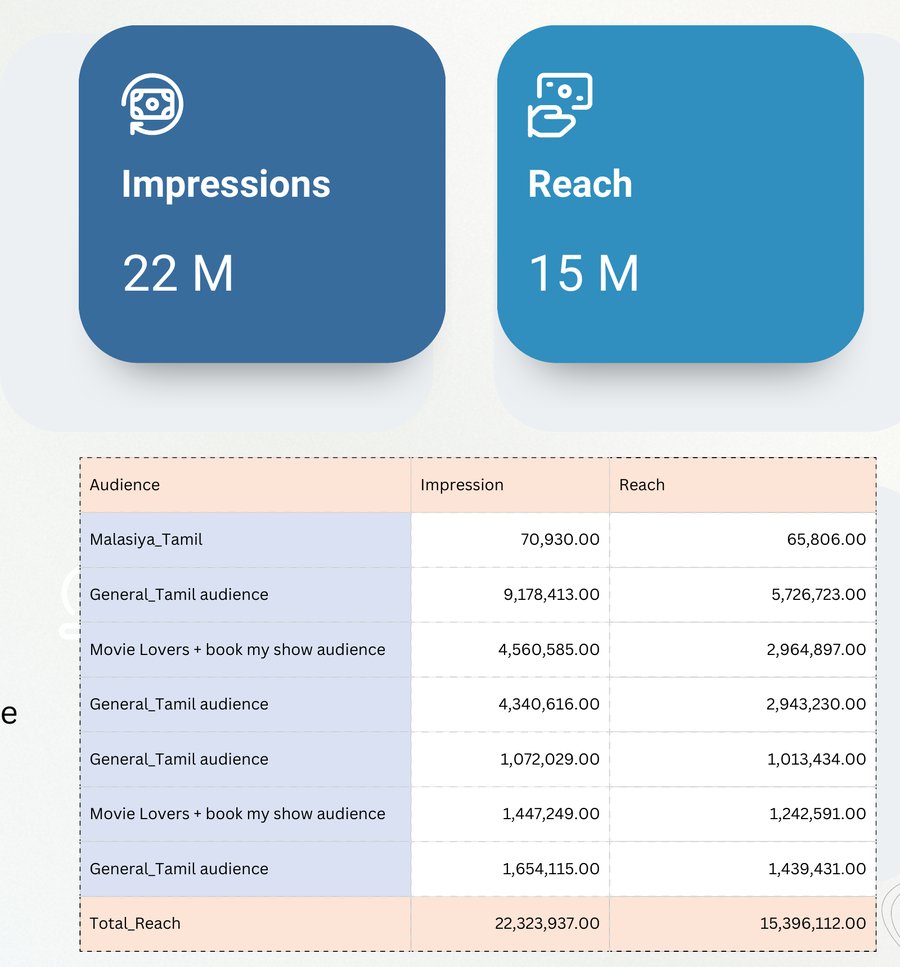
YouTube — Creative Type View Rate
Trailers pulled the highest raw view count (1.5M+), but Promos converted impressions into views nearly twice as often — a smaller, sharper cut of footage earned more attention per person it reached.
YouTube — Reach by Placement
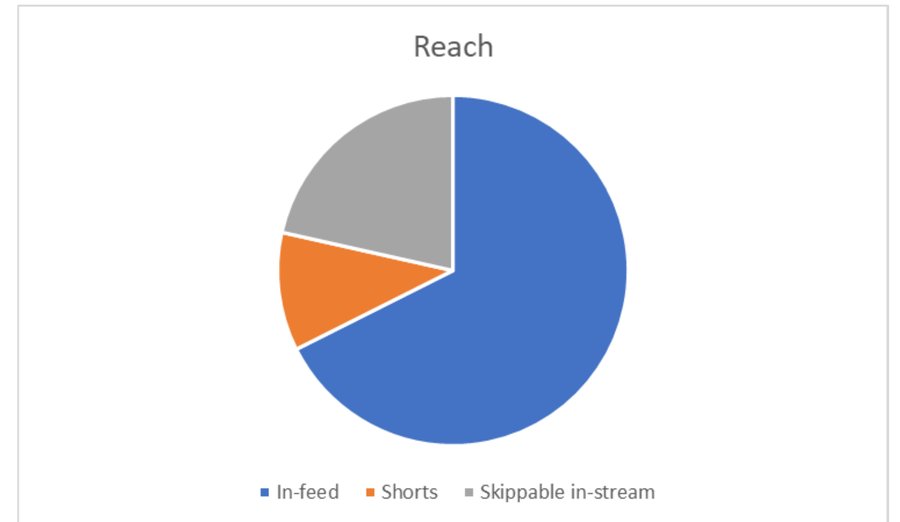
In‑feed placements led on both scale and completion. Skippable in‑stream punched above its weight too — a strong sign viewers chose to keep watching rather than skip past the trailer.
YouTube — Impressions & Views by Format
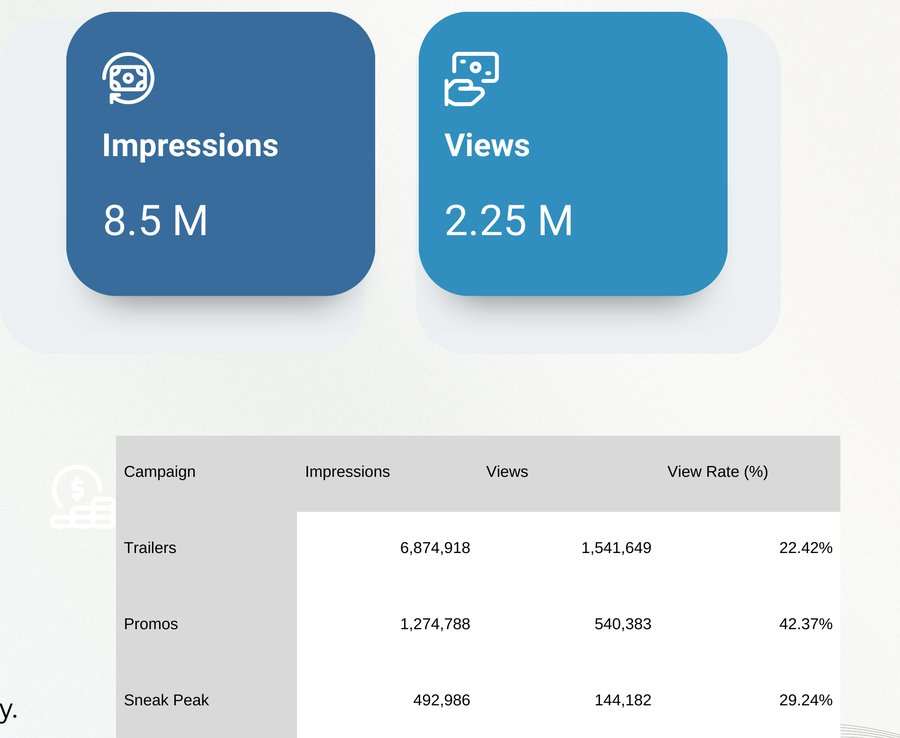
What people actually stopped to watch
Two views of the same push — the ad units as posts in the feed, and as they actually appeared on-screen to a viewer.
Top Performing Ad Creatives — Feed Posts
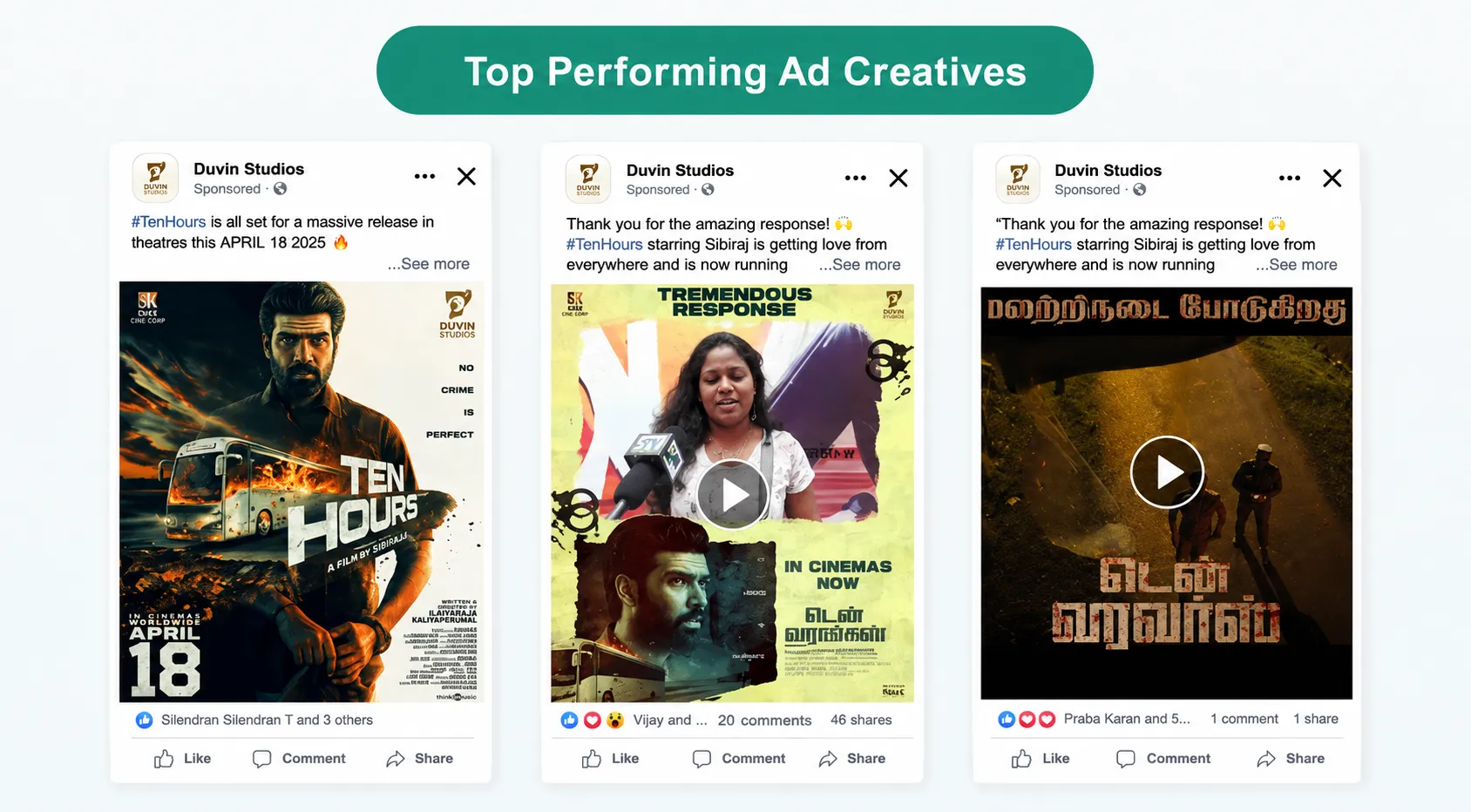
Poster reveal · reaction video · trailer post
Poster reveal, testimonial‑style reaction video, and trailer post — the three posts that drove the most engagement, shown as they appeared in-feed.
Top Performing Ad Creatives — On-Screen View
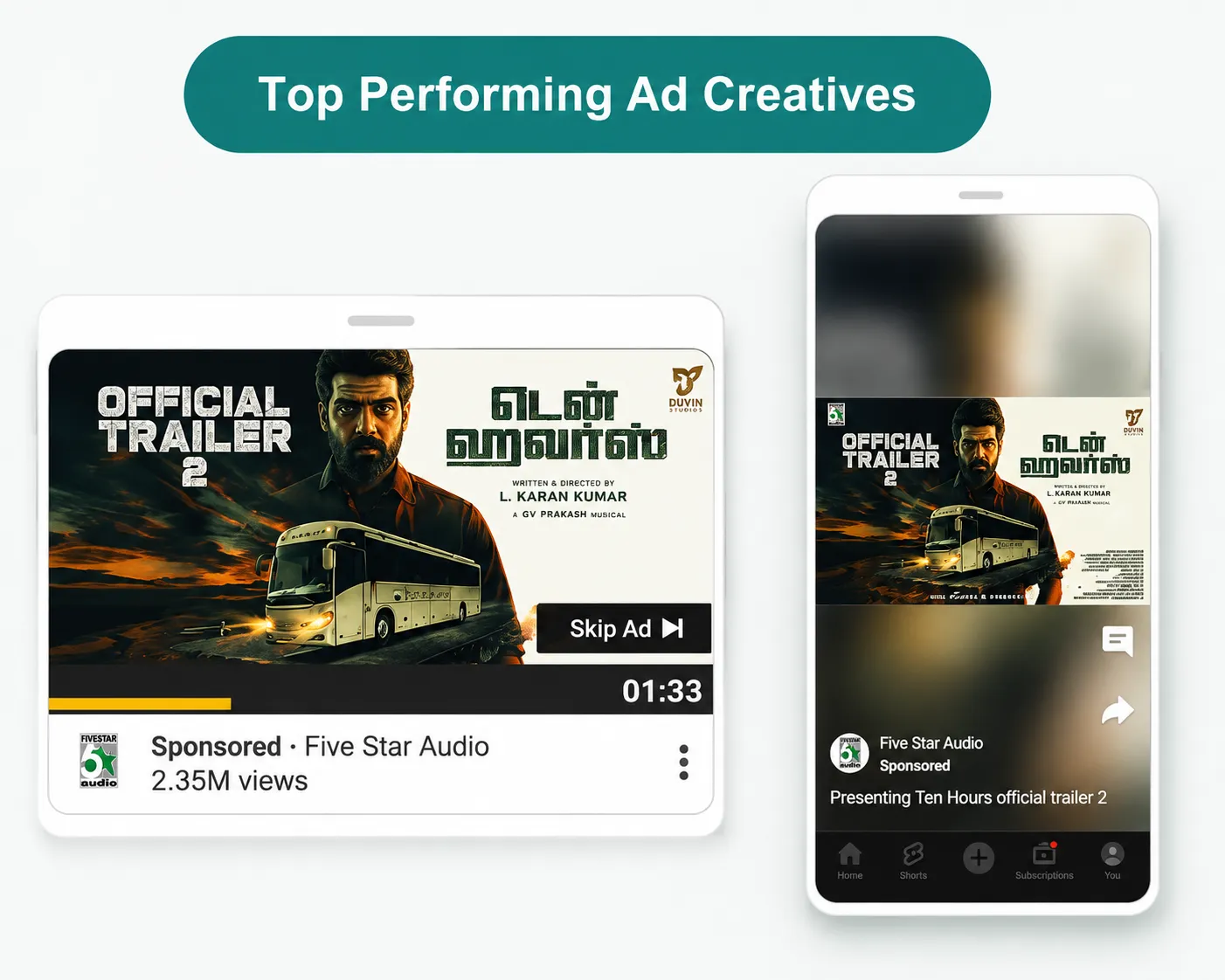
In-stream ad · native feed view
The same trailer, seen the way viewers actually saw it — as a skippable in‑stream ad and inside the native mobile feed.
The playbook for the next release
Reels first, everything else second
Vertical, short‑form video consistently out‑delivered feed and story formats on both Instagram and Facebook — future budgets should default to Reels‑native creative.
Layer a broad audience with an intent‑rich one
The General Tamil Audience built scale, but the smaller Movie Lovers + BookMyShow segment engaged harder — running both together, not either alone, is the right call.
Trim the trailer for promos
Shorter promo cuts nearly doubled the view rate of the full trailer — worth testing more aggressively as a primary format, not just a supporting one.
In‑feed and skippable in‑stream earn their spend
Both formats on YouTube converted impressions into real watch time — Shorts, by comparison, needs a format‑specific creative rework before it's worth scaling.
Have a launch on the clock?
Whether it's a film release, a product drop, or a brand campaign — we build the strategy and the creative to make every hour before launch count.
Talk to JNC Verse →